Introduction
Natural teeth whitening refers to methods that help lighten tooth stains using everyday habits, gentle ingredients, and lifestyle changes rather than strong chemical whitening treatments. Many people look for natural ways to whiten teeth because they want a brighter smile without harsh bleaching products. While some natural approaches can help reduce surface stains, others may not work as effectively as professional dental treatments.
At The Avenue Dental, we often meet patients who want to improve their smile using natural or DIY methods before considering professional whitening. Some home remedies can help maintain tooth brightness, while others may damage enamel if used incorrectly.
In this comprehensive guide, we will explain:
• The most popular natural teeth whitening remedies
• Safe home remedies for teeth whitening
• Which DIY whitening methods actually work
• Which natural whitening trends dentists recommend avoiding
• When to consider professional teeth whitening
By the end of this guide, you will understand the safest natural approaches to teeth whitening and how to maintain a brighter smile long-term.
Quick Answer: Do Natural Teeth Whitening Methods Work?
Yes, some natural ways to whiten teeth can help reduce surface stains, but they typically produce subtle results compared with professional treatments.
Natural whitening methods may include:
• brushing with baking soda toothpaste
• oil pulling with coconut oil
• maintaining strong oral hygiene
• limiting stain-causing foods
However, deeper stains usually require professional whitening.
According to Healthdirect Australia’s information on teeth whitening, professional whitening treatments provide more predictable results compared with home remedies.
Why Teeth Become Discoloured
Before exploring whitening remedies, it helps to understand why teeth lose their brightness.
Common causes of tooth staining
• coffee and tea consumption
• red wine
• smoking or tobacco use
• ageing enamel
• certain medications
• poor oral hygiene
Over time, stains accumulate within microscopic pores in enamel.
These stains can be external (surface stains) or internal (within the tooth structure).
Natural Ways to Whiten Teeth Safely
Some natural techniques can help maintain whiter teeth by reducing stains and supporting enamel health.
1. Brushing with Baking Soda Toothpaste
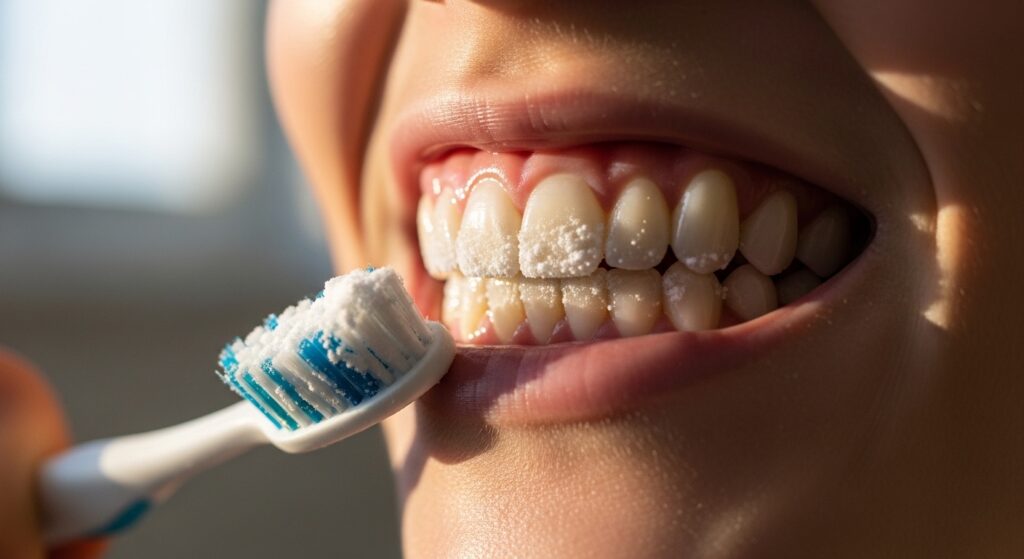
Baking soda is a mild abrasive that can remove surface stains.
Benefits:
• gentle stain removal
• inexpensive whitening option
• commonly used in whitening toothpaste
However, baking soda alone will not change the natural colour of teeth.
2. Oil Pulling with Coconut Oil
Oil pulling involves swishing oil in the mouth to remove bacteria.
Potential benefits include:
• improved oral hygiene
• reduced plaque buildup
• fresher breath
Some people believe it helps brighten teeth by reducing plaque that causes staining.
3. Eating Crunchy Fruits and Vegetables
Foods such as apples, carrots, and celery can help clean teeth naturally.
These foods:
• stimulate saliva production
• help remove surface debris
• promote oral health
Although not a whitening treatment, they help maintain cleaner teeth.
4. Maintaining Excellent Oral Hygiene
Brushing and flossing regularly can prevent stains from forming.
Important habits include:
• brushing twice daily
• flossing once daily
• visiting a dentist for professional cleaning
Patients who maintain good oral hygiene are less likely to develop deep stains.
DIY Teeth Whitening Methods to Avoid
Some viral DIY whitening trends can damage enamel.
Unsafe whitening methods
• lemon juice brushing
• activated charcoal scrubbing
• hydrogen peroxide rinses without supervision
Acidic ingredients like lemon juice can erode enamel and increase tooth sensitivity.
Dentists generally advise caution with DIY whitening techniques.
Home Remedies for Teeth Whitening: What Works and What Doesn’t
Comparison of popular home remedies
| Remedy | Effectiveness | Safety |
| Baking soda toothpaste | Moderate | Safe when used correctly |
| Coconut oil pulling | Mild | Generally safe |
| Activated charcoal | Limited evidence | Can damage enamel |
| Lemon juice | Ineffective | Risk of enamel damage |
Natural methods can support oral hygiene but usually do not produce dramatic whitening.
Professional Teeth Whitening vs Natural Whitening
Many patients eventually choose professional whitening for stronger results.
Natural whitening
Advantages
• inexpensive
• gentle
• easy to try at home
Limitations
• slower results
• minimal colour change
Professional teeth whitening
Advantages
• faster results
• deeper stain removal
• dentist supervision
Patients interested in brighter results can explore professional teeth whitening treatments available at our clinic.
Tips to Prevent Teeth Staining
Prevention is one of the best ways to maintain white teeth.
Helpful habits
• rinse mouth after drinking coffee or wine
• drink staining beverages through a straw
• brush teeth after meals
• schedule regular dental cleanings
These habits reduce the buildup of staining compounds.
When to See a Teeth Whitening Dentist
If natural methods do not provide the results you want, professional whitening may be the best option.
Patients often search for a teeth whitening dentist near me when they want noticeable improvements quickly.
Dentists can evaluate:
• enamel health
• type of tooth staining
• suitability for whitening treatments
Patients can learn more about our clinic by visiting The Avenue Dental practice page.
Real Patient Example
At The Avenue Dental, a patient recently tried several natural whitening remedies at home but noticed only minor improvements.
After discussing their goals, we recommended professional whitening to address deeper stains caused by coffee.
Following treatment, their teeth became several shades brighter, and the patient was thrilled with the results.
Patients who wish to brighten their smile can book an appointment online or contact our team.
Quick Answers About Natural Teeth Whitening
Do natural teeth whitening remedies work?
Some remedies can reduce surface stains, but results are usually limited compared with professional treatments.
Is baking soda safe for whitening teeth?
Yes, when used in toothpaste formulations, baking soda can help remove surface stains.
Can lemon juice whiten teeth?
Lemon juice is acidic and may damage enamel, so dentists generally advise against using it.
How long do natural whitening results last?
Results depend on oral hygiene and diet but tend to be subtle.
Is professional whitening better than home remedies?
Professional whitening usually produces faster and more noticeable results.
Conclusion
Natural teeth whitening methods can help maintain a brighter smile by removing surface stains and improving oral hygiene habits. While some home remedies may provide mild improvements, professional whitening treatments usually offer faster and more noticeable results.
At The Avenue Dental, our team helps patients choose the safest whitening approach based on their dental health and cosmetic goals.If you are interested in improving your smile, you can book a consultation online or contact our team to explore your whitening options.