
Introduction
Noticing whitening spots on teeth after a whitening treatment can be alarming, but these marks are fairly common and often temporary. White spots can appear due to pre-existing enamel issues, demineralisation, or uneven absorption of bleaching agents. While teeth whitening improves overall tooth brightness, it may make pre-existing white spots more noticeable.
In this guide, we’ll explain the main causes of white spots on teeth, how they form after whitening, and safe treatment options. We will also provide tips on how to prevent them and when to consult a dentist. For professional advice, The Avenue Dental offers tailored treatments to restore uniform tooth colour.
What Causes White Spots on Teeth?
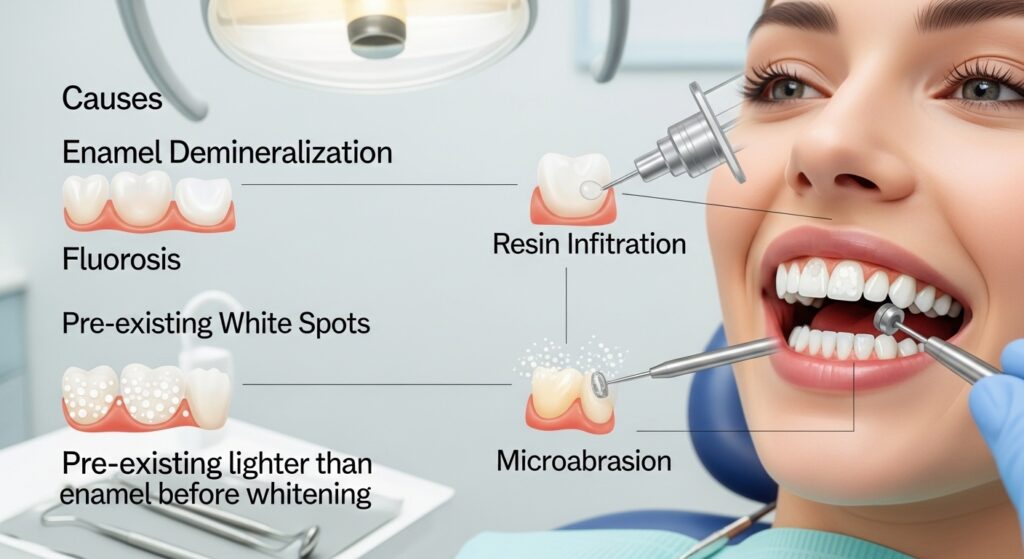
1. Enamel Hypomineralisation
- Occurs when the enamel is weaker or underdeveloped during tooth formation.
- Can be congenital or caused by illness or nutritional deficiencies in childhood.
- Spots are often chalky white and more noticeable after whitening treatments.
2. Fluorosis
- Caused by excessive fluoride exposure during tooth development.
- Produces faint to severe white streaks or spots on teeth.
- Whitening can sometimes intensify their appearance.
3. Demineralisation from Plaque Build-Up
- Poor oral hygiene can cause demineralisation, leaving white spots, particularly near gum lines.
- Common in patients with braces or heavy plaque accumulation.
4. Post-Whitening Sensitivity
- Whitening gels can temporarily dehydrate teeth, making white spots more visible.
- This is usually temporary and resolves with proper remineralisation.
For more detailed explanations of tooth enamel issues, check the Australian Dental Association guidance on oral health.
Can Teeth Whitening Remove White Spots?
Short Answer: Teeth whitening alone rarely removes white spots.
- Whitening brightens the surrounding tooth, sometimes making spots more visible initially.
- Professional treatments can reduce contrast through gradual lightening combined with remineralisation techniques.
Treatment Options for White Spot Lesions
1. Remineralisation Therapy
- Fluoride varnishes or casein phosphopeptide-amorphous calcium phosphate (CPP-ACP) gels can strengthen enamel.
- Usually requires multiple dental visits for effective results.
2. Microabrasion
- A minimally invasive procedure where a thin layer of enamel is removed to reduce spot visibility.
- Often combined with professional whitening to improve overall uniformity.
3. Resin Infiltration
- A tooth-coloured resin penetrates white spots to blend them with the surrounding enamel.
- Non-invasive and effective for mild to moderate lesions.
4. Veneers or Cosmetic Bonding
- For severe or persistent spots, a cosmetic restoration such as a veneer or composite bonding can provide an immediate aesthetic improvement.
- The Avenue Dental cosmetic dentistry services offer tailored solutions.
How to Prevent White Spots During Whitening
- Maintain excellent oral hygiene before and after whitening treatments.
- Use fluoride toothpaste and mouthwash to strengthen enamel.
- Consult a dentist for a pre-whitening assessment to identify pre-existing lesions.
- Avoid excessive at-home bleaching, which can exacerbate enamel dehydration.
Conclusion
Whitening spots on teeth are usually not a sign of damage but indicate pre-existing enamel variations. Treatments such as remineralisation, microabrasion, resin infiltration, or cosmetic bonding can effectively improve tooth appearance. Professional assessment ensures safe whitening while minimising the visibility of white spots. For personalised evaluation and treatment, contact The Avenue Dental for more information.
Quick Answers / FAQ
Why do white spots appear after teeth whitening?
White spots often pre-exist but become more noticeable after whitening due to temporary enamel dehydration.
Can whitening remove white spots on teeth?
No, whitening usually brightens the entire tooth but does not eliminate existing white spots.
How do dentists treat white spot lesions?
Options include remineralisation therapy, microabrasion, resin infiltration, or cosmetic restorations.
Are white spots permanent?
Some are permanent, particularly those from fluorosis or enamel hypomineralisation, but treatments can reduce their visibility.
Is it safe to whiten teeth with white spots?
Yes, but a dentist should evaluate your teeth first to prevent worsening the appearance of spots.
Average Costs for Treatment Options in Australia
| Treatment | Typical Price (AUD) | Notes |
| Remineralisation Therapy | 50–150 per session | Multiple visits may be required |
| Microabrasion | 100–300 per tooth | Minimally invasive |
| Resin Infiltration | 300–600 per tooth | Blends spots with enamel |
| Veneers / Bonding | 500–1,500 per tooth | Cosmetic solution for severe cases |